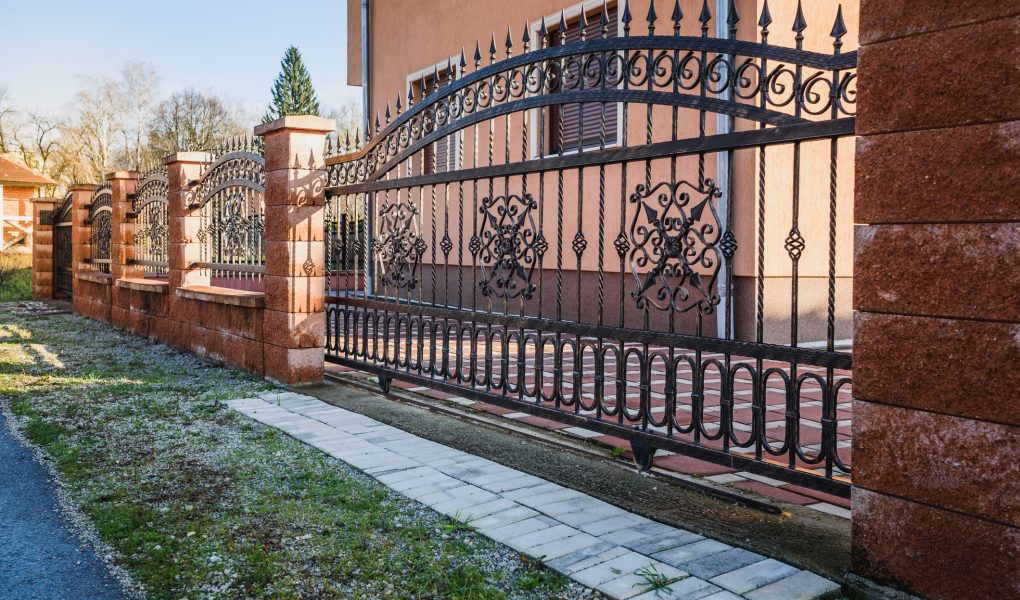
The first thing to say is that metal gates, like a lot of things, tend to be viewed in terms of what they keep out: unwanted visitors, stray animals, thieves, and so on. And they’re good at that, no question. But if you spend some time looking at houses where metal gates have been installed thoughtfully, you’ll quickly realise that they’re actually delivering a lot more than that.
The decision to put metal gates up will ultimately depend on a combination of necessity and desire, though how those two factors balance out will vary enormously.
The Longevity Question
The first point to make is that metal gates have a significantly greater lifespan than their wooden cousins, and when you’re looking at the cost of a gate, you have to consider that, not just the actual cost of the gate itself.
A steel or iron gate will happily last thirty years or more with virtually no maintenance, whereas a wooden gate will need to be treated every few years, will probably start to sag after a decade, and will eventually need to be replaced.
Aluminium gates will not rust, as steel will, if a protective coating is damaged, making them a great choice if you’re on a coastal property or in a part of the world where salt in the air will be a problem in winter. The downside is that they’re not as solid when you open and shut them, being slightly less rigid than steel.
Traditional homes will still want wrought iron, which, while expensive, will last beautifully with minimal maintenance and can always be adapted or repaired by a good blacksmith if needed. Modern mild steel gates are a more affordable option, although they will not have the same charm as wrought iron, which develops its own patina over time.
Automation and Access Control
Today, automated metal gates are becoming more common. Automation can vary from simple remote control to complex systems. The gate has to be designed from scratch for automation. Automation of single gates is easier compared to double gates. However, single gates need more space to open. Double gates can be automated separately or together. They can also allow for pedestrian access through one of the gates, leaving the other closed.
Sliding gates can also be automated. Sliding gates can address space issues. However, there should be enough space for the gate to slide off. There should also be space on the ground for the gate to slide without leaves or snow accumulating.
The automation itself is another factor to consider for maintenance purposes. The mechanical components will require servicing from time to time, electrical components may fail, and sensors will need calibration. While a commercial property or a busy residential entrance may warrant a professionally installed and maintained solution, for an occasional use application, a simple manual solution may prove to be a far more reliable long-term solution.
Cost Versus Value
Metal gates are a major outlay compared to most other options. A bespoke wrought iron entrance gate could cost into the thousands of dollars. Even a basic steel gate will cost significantly more than timber-based options. However, if one divides the cost by the useful life of the gate, a different figure is obtained.
Where metal gates do offer value is for properties where security and aesthetics are important. Period homes will benefit from maintaining the original metal railings or gates. Commercial properties will benefit from the professional look and security provided by metal gates. Rural properties will benefit from the durability of metal gates, which are required to withstand heavy use.
The weakest argument for metal gates is for those who wish to use them for fashion or to be seen to be ‘with it.’ If the intention is to install metal gates because they are seen to be contemporary and prestigious, without any thought for how they will fit into the overall aesthetic of the property, it is likely that a solution will be imposed rather than being an integral part of the property. Metal gates are best used for what they are good for rather than what they might come to symbolise.